


I have always been prone to motion sickness. When I was about nine years old, my family took a car trip up the east coast and we stopped in Hershey, PA to visit Hershey Park. No sooner had I walked through the gates and laid eyes on all the rides than I began to feel nauseous. I summoned enough courage to take a ride on the Comet – an old wooden roller coaster built in 1946 – which turned out to be my first, and last, roller coaster ride. I felt so sick afterwards that it took hours to fully recover.
Later, in high school, I went on a school trip to Los Angeles. As our plane began its descent into LAX, the seatbelt sign came on and the pilot calmly informed us that we would be experiencing turbulence. He wasn’t exaggerating. The plane began lurching violently up and down, left and right. I grimly clutched my sickness bag and tried to find some point to focus my eyes on, but I couldn’t prevent waves of nausea from washing over me as the plane continued its thrashing course for the next 15 minutes.
As miserable and memorable as that plane ride was, though, the pilot still managed to land the plane, and a few hours later, my nausea subsided and I had a great time visiting LA with my classmates.
I understand how awful turbulence feels. I don’t relish it. However, I still choose to fly because A) it’s much faster than driving, and B) the data overwhelmingly proves that it is a safe way to travel – even safer than driving a car.
Over the last few days, we have experienced some severe turbulence in the market. Back-to-back one-day declines of 5%+ are enough to make you grab for the sickness bag. Still, despite the unpleasant feelings that this turbulence produces, it’s important to remember that investing in stocks is still a much more effective way to grow wealth and guard against the long-term erosive effects of inflation than putting your money under the proverbial mattress.
With all of this in mind, here are some in-flight reminders for withstanding turbulence:
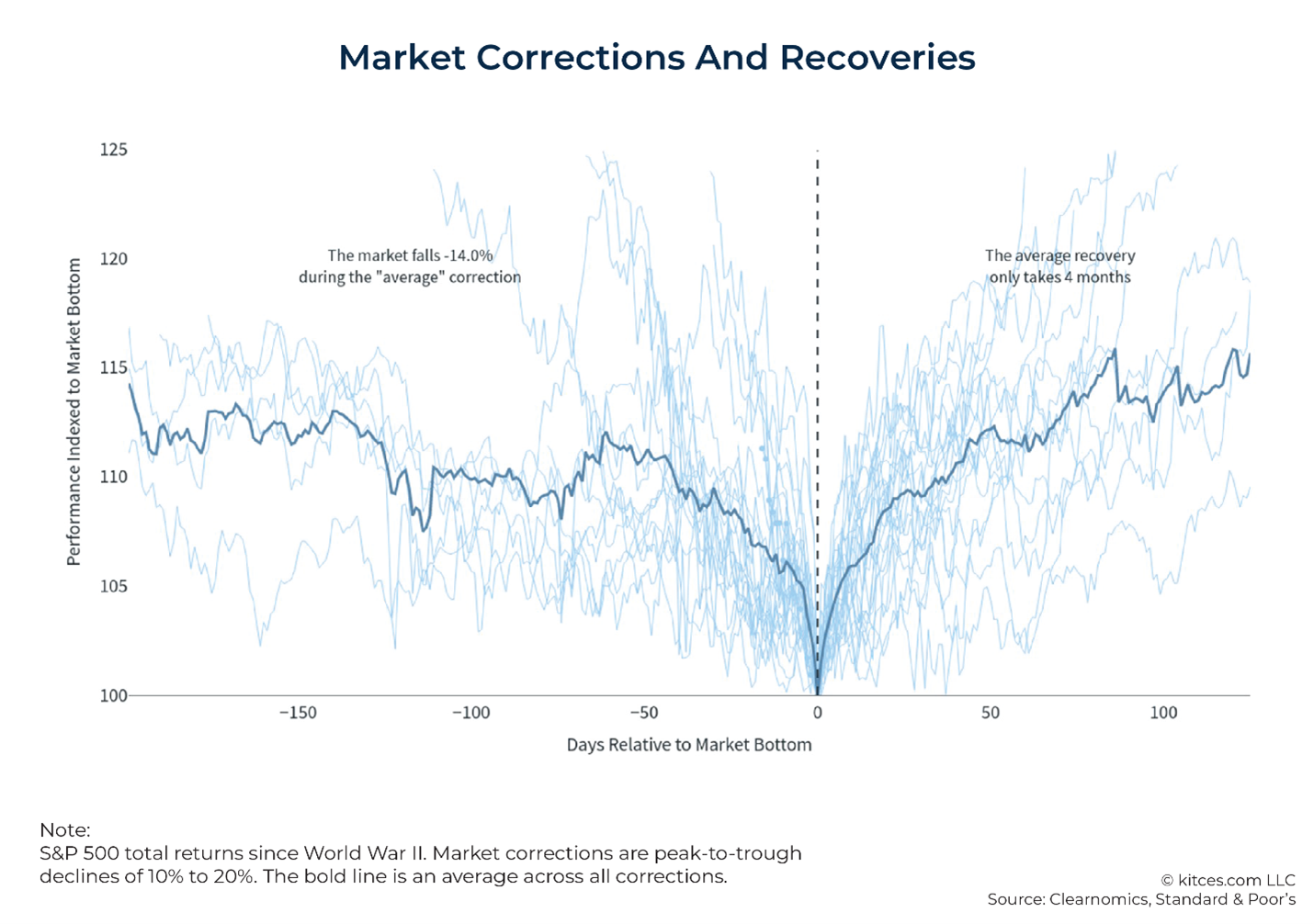
1) Accept the fact that turbulence is inevitable. Markets don’t go up in a straight line, but they do go up over time. Corrections happen (as evidenced by the chart below, which traces the timeline of every market correction and subsequent recovery since WWII). Short-term volatility is the price you pay for long-term appreciation.
2) Remember that the odds are in your favor. Flying is, objectively, safe. Similarly, the longer you remain invested in the market, the greater your odds of success. Even on a one-day basis, the odds that the market will be up is higher than a coin flip. Stretch that time horizon out to over 10+ years and the odds are close to 100%. The charts below highlight the percentage of positive returns over 1-, 3-, 5-, and 10-yr periods from 1927-2023:
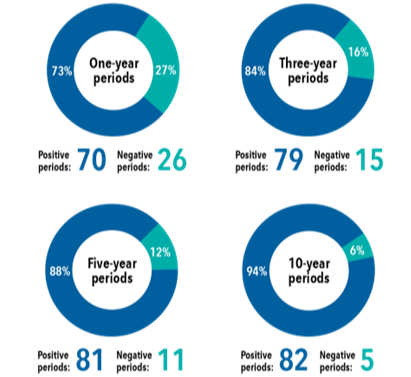
Source: Capital Group, S&P Dow Jones Indices LLC
3) Trust the pilot. If your advisor isn’t panicking about turbulence, neither should you. They’ve been through turbulence many times before, and while they can’t control the movement of the wind/market, they know how to get the plane safely to its destination.
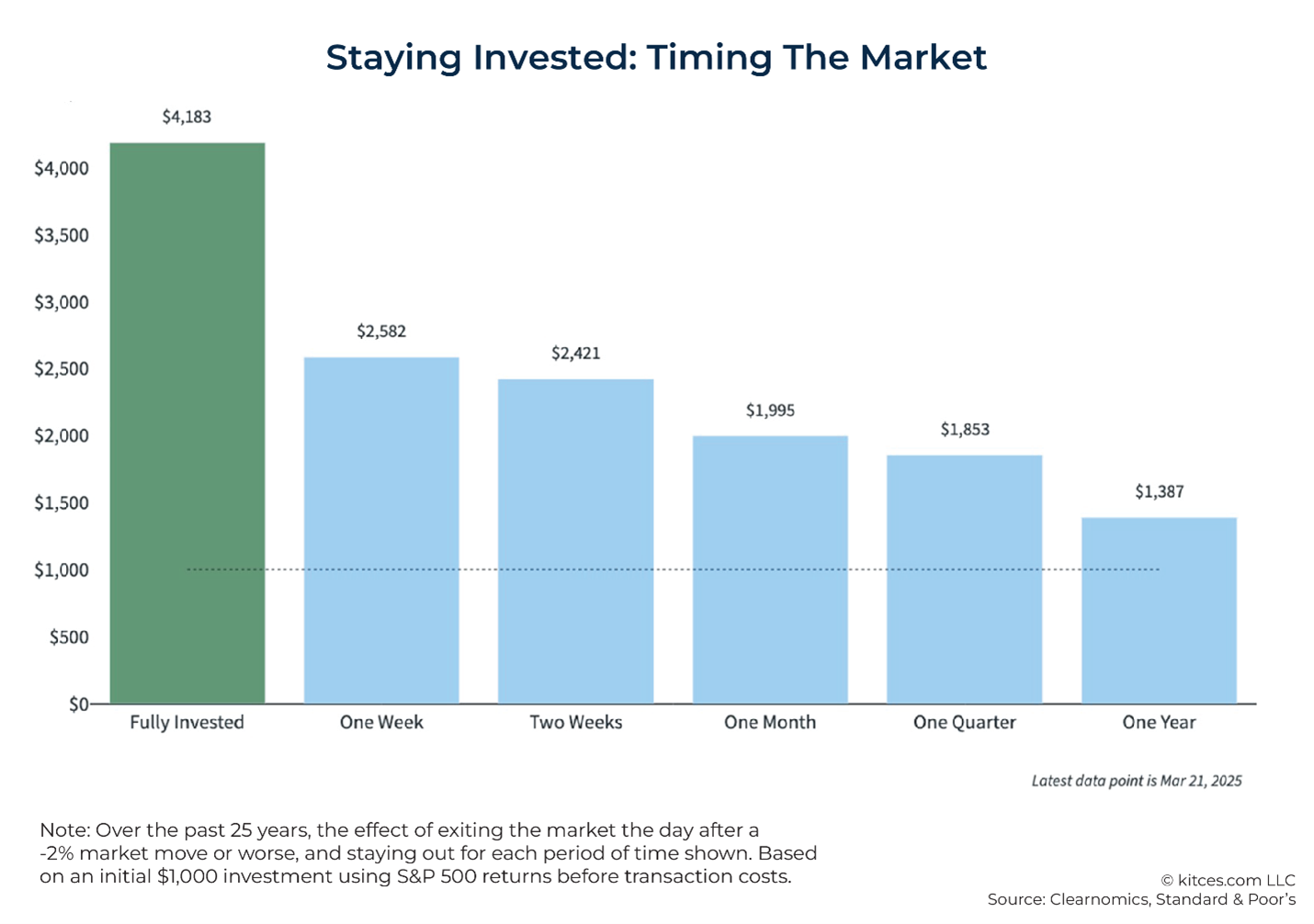
4) Ignore cries of panic. Don’t listen to the guy two rows behind you who’s shouting about the plane going down; listen to the calm voice of reason over the intercom. When markets are in decline, the media loves to amp up the emotional messaging. You are bound to see a sharp uptick in headlines featuring words like “crash,” “rout,” “tumble,” “tank,” “tailspin,” etc. Fear may attract attention, but it is a thief; don’t let it rob you of your joy or your investment success. The charts below show how important it is to remain level-headed; failure to redeploy assets that you sold in a panic has historically led to missed opportunities and lower returns:
5) Focus on what you can control. In the context of investing, look for opportunities: tax-loss selling, wealth transfer, reallocating, etc. In the long run, market declines are nothing more than planning opportunities for the focused, patient investor.
For now, the seatbelt sign is on. The market is digesting the impact of tariffs on global trade, and volatility is spiking. No one knows how long the turbulence will last, or how severe it will ultimately prove. However, with history as our guide, we can, and ought to, remain patient and stick to a disciplined plan. In so doing, your plan(e) will arrive safely at its destination.
And Now For Something Completely Different...
Rafa Campos's story heading into the Masters is nothing short of incredible. Talk about turbulence!